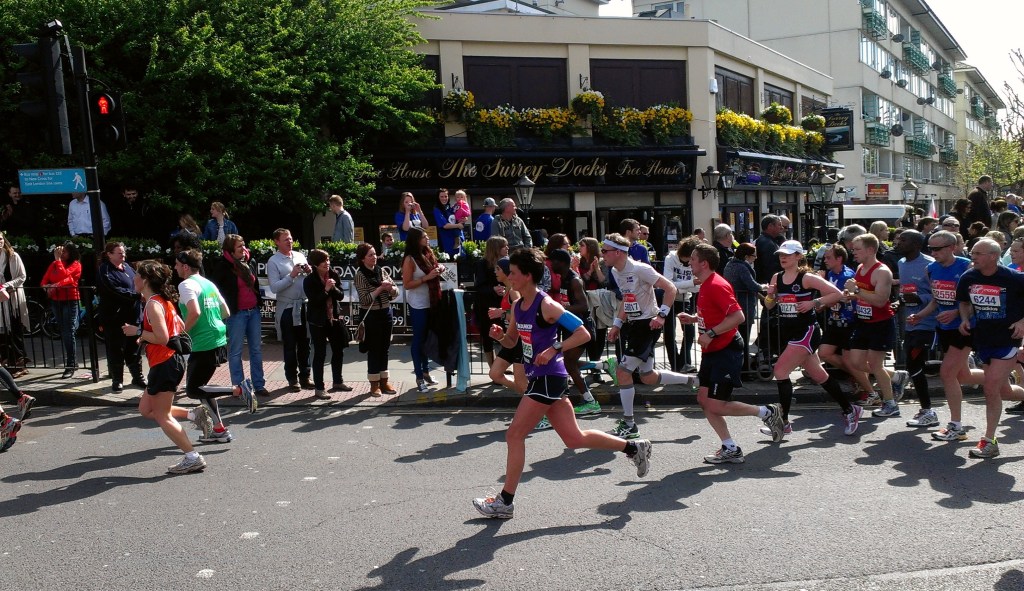
Making the most of a crisis

This tiny virus has throw all our lives into disarray, but it is possible to find positives in all the upheaval and use it to improve your running.  As runners we probably all like to have plans and goals to achieve and to have all these suddenly taken away can be very frustrating.

You have set a goal, put in the work. Then the race is canceled. But it was never really about the race, was it? It’s about the runner you’ve become. So find the winning mindset. Find your racing shoes. Keep competing against yourself. Because that’s the only race that really matters.

What can you do?

  • Reassess; what do you enjoy, what area of training do you need to speed more time on, what are your long term goals?
  • Keep fit to protect yourself.  Staying fit will boost your immune system.  There is conflicting advice about exactly how hard you should train, but a moderate intensity, doing what you regularly do will help boost your immunity to Covid-19.  (Unless you feel unwell, in which case you shouldn’t exercise.) If you can get outside, you will also gain valuable Vitamin D.  What you really want to avoid is any training on depleted glycogen stores, as this depresses you immune system, so no runs without fuelling first and refuel well after you finish.
  • Spend extra time you gain from not going out, on building a more resilient body through conditioning work, yoga etc.  There are lots of online workout to try or recommend books are: ‘Running rewired’ by Jay Dicharry and ‘Strength Training for Runners’ by John Shephard.
  • You can also work on your mental training.  This whole episode will improve your mental toughness provided you don’t let it get you down.  The more you look into what slows runners down when racing, the more you see how important the mental side is, particularly as you move to longer distances.  But how many of us actually work on this?  Try some meditation and breathing exercises to work on focus and stay positive through this difficult time. A great read all about what really makes us slow down or stop is: ‘Endure’ by Alex Hutchinson.
  • If you can get outside, make the most of it and enjoy every second of running.  Join an online group on Strava etc. so you can share running with others and keep each other going.  Set yourself small challenges every so often to keep the interest.  This could be running a small loop of 3-6k as fast as you can or seeing how many Strava segment personal record times you can set in one run.
  • Watch some inspiration running videos and plan your next big adventure:

Kilian Jornet, Summits of my Life

Free Solo

The Barkley Marathons

Kungsleden with Emelie Forsberg

(The last one is my favourite.)

Muscle Cramps!

Muscle cramps are so annoying and can be very debilitating in the middle of a race, so what causes them and what can you do to prevent them?

Muscle cramps are involuntary contractions of muscles from excessively excited nerves over stimulating them.  There are many different reason why you might get them and the solution that helps will depend on why you had them to start with.

Possible reasons:

  • Dehydration
  • Low electrolytes (calcium, potassium, magnesium)
  • Muscle fatigue
  • Muscle tightness
  • Genetic predisposition (you can’t do anything about this.)

Solutions:

  • Run more to prepare muscles.
  • Stay hydrated with a drink containing electrolytes.
  • Stretch out the effected muscle.
  • Distract the nervous system with pickle water, chilli or mustard.  Pickle water also contains sodium.

Traits to develop and those to loose

If you listen to top runners who have been successful for a while, there are several traits that they share:

  1. They focus on themselves and their own self improvement and goals.
  2. They are always looking for how they can improve.
  3. They use more positive words to describe hard training and racing.
  4. They have a great support team.  You may not be able to afford a large team of professionals, but you can still get support from family, team mates, coaches and a good physio or sports masseur.
  5. They want to do things well, not rush to get through everything.  It is far more important to do training correctly than just go through the motions, or push too hard.
  6. They love to race.
  7. They accept set backs and disappointments as a chance to learn.

Those who struggle to reach their full potential:

  1. Make every training and race of critical importance.  This puts too much stress on you all the time.  It is the bigger picture that matters.
  2. They don’t value rest and recovery.  This is training too!
  3. They may also be so focused on running that they are inconsistent about other aspects of training, like mobility, nutrition, sleep and S&C work.
  4. They are too hard on themselves.  Unlike the successful runners above, who see set backs as a learning experience, they will take it as personal failure.
  5. They are always looking for something or someone else to blame for a lack of progress.  It is important to take ownership of your training.  Could you have slept more, recovered better or trained harder?
  6. They can’t accept that results take time.  For running it may be years to reach full potential.  Consistency is what matters.
  7. They may not accept advice that they don’t want to hear.

Why Distance Runners need to Sprint

You may see sprinters as an entirely different species and wonder just how doing anything that they do could help your marathon training. Indeed, if you have seen sprinters at training, they seem to spend most of their time just chatting and stretching. There must be better ways to use my training time!

However, there are times in your training when this is exactly what you need. The benefits of doing some REAL sprint work are that it will help you recruit more muscles fibres, improve run technique and make your running more efficient. It will also prevent you hitting a speed limit. If you can’t run that fast over 100 or 200m, you will never do it for 1500m. And for older runners it is even more important, as you will loose your speed if you don’t use it.

So to go into a bit more detail on how it helps. First doing some flat out sprint work will teach your body how to recruit all, or most of the muscle fibres you have. On a normal distance run you will be using mainly your slower to fatigue, Slow Twitch Muscle fibres. When you sprint you also call on the Fast Twitch ones. These can then also be called on when you have worn out the Slow ones towards the end of a marathon or for a fast race finish.

Improvements in run technique come from eliminating any wasteful movements and encourage you to land under your centre of gravity and bring your foot through quickly. This, in turn, can improve running efficiency, along with getting a better energy return from a short ground contact.

I do find a sprint session the hardest session to persuade the athletes I coach to do. They look at a 6x60m session and say is that all! Then either go for a run instead or rush through the session so there is time to do something else. A successful sprint session needs long recoveries and a good warm up. If you are new to sprinting, or worried about injury, then hill sprints are the safest way to start, but you must walk SLOWLY back down the hill and be fully recovered between each one and then give it your all. A sensible start to sprinting would be 6×8-10s up hill, after a full warm up.

Working out where it fit sprint training in your annual plan can also be tricky. I usually put it after recovery from a marathon or other big A race. Then you are working on getting your legs moving again. I like to put in a 4-6 week of a once a week sprint session, then through the rest of the year add in a few hill sprints or strides regularly to sessions to maintain speed.

Tempo then speed work?

Should we be doing speed work after a tempo run? This is a debate I just came across from a podcast (Final Surge podcast episode 150).  A well known coach in the States, Jonathon Marcus, started a big debate by tweeting that it was useless to do speed work after a tempo run.  

There is some truth in this.  If you want to improve technique this should always be done fresh and if your aim is to improve your top end speed this should also be done first.  But there are benefits to doing it the other way round.  You may wish to develop the skill of a fast sprint finish at the end of a race when legs are tired. And then there is also the mental benefit of feeling like you couldn’t possibly run any faster and then finding that you can.

So when you are working out how to order the elements of your training session, order matters. Do your speed work first (after a warm up of course), then move on to lower speeds, if you want to maximise technique work and build endurance and fatigue resistance through the extra running afterwards. A short tempo run after the speed work can also help with recovery as it cools the body more gradually than going from flat out sprint to super easy.

Put your speed work at the end of the session if you want to work on your sprint finish and confidence. You may also improve muscle recruitment as you will have fatigued some muscle fibres and so will call on those less used.

Next time why endurance need to do sprint work at all…

Recovery

Recovery is a vital part of your training and should not be overlooked. Get it right and it can be one of the easiest ways to improve your race times. Your body will only improve from your hard workouts if you allow it to recover and adapt to the training stresses.

There are 3 main factors that will improve your recovery; nutrition, sleep or rest and active recovery. 

  1. Nutrition. After hard training and races you should look to replace the nutrients lost within 30-60 min of finishing. These will be fluid, carbs, protein and electrolytes. Fluid replacement is best done gradually.  One solution that helps with fluids and nutrient replacement is chocolate milk. You also want to concentrate on high GI foods post workout, so it’s the perfect time to indulge in some sweet treats. Just watch that the fat content is low.
  2. Sleep and rest. I think you probably all know how important this is for recovery, so make sure you do get enough. It can be very hard to sleep well after a marathon or other big race, but try to catch up on extra sleep on the following nights.
  3. Active rest. Recovery runs must be done at an easy pace! If the purpose of your run is recovery, keep the pace below marathon pace. You will get more benefits from this slow pace than from going any faster. Cross-training can also be a good way to recover, if done at an easy pace. Heart rate is the best way to check if you are going too hard. It should be kept less than 60% of max.

Heart rate is also the easiest way to check if you are ready for another hard session. If your resting heart rate is up, then more recovery is required. Other signs that you may be over doing things and heading towards over training are: trouble sleeping, easy runs feeling hard, sore muscles, an increase in minor illnesses and just feeling tired all the time. The solution is to train less not more. If you train more and have been over doing it, your times will just get worse.

Common 1st timers Marathon Mistakes

If you want to enjoy your first marathon try to avoid making any of the mistakes below and follow these tips:

1. Don’t play catch up with training: if you miss more than 5 days of training don’t jump straight back in where you should have been.  Adjust your plan and build back gradually.

2. Don’t skimp on sleep and food: expect that your body is going to need more as your training goes up.  Listen to your body and allow it what it needs.  Eat a varied and healthy diet and don’t be afraid to take an afternoon nap!

3. Get niggles looked at early: don’t allow any injuries to develop, get them seen to and have a regular sports massage.

4. Pace yourself: both in training sessions and in completing all the training.  If a run is meant to be easy, make sure it is.  Going faster than the set pace will just mean you can do fewer miles, so it doesn’t help for the marathon.

5. Long runs are your most important session each week: if you miss one try to replace another session with it.

6. Include some speedwork: your week should always include at least some strides or short hill sprints to keep your legs able to move quickly, and also help with technique.

7. Test out gels or other nutrition: use your long runs to workout race day nutrition. Don’t leave it to race day.

8. Include limited pre breakfast runs: these help to improve fat burning, but are hard on your body so don’t do more than 1 per week and no more than 5 miles.

9. Build long runs gradually: but then drop back every 4th week for recovery.  For example you might do 10, 12, 14, 10, 16, 18, 20, 14, 20.

10. Enjoy your long runs, take them as a chance to explore somewhere new or to catch up with running friends.

Why Trail Run?

There are many benefits to trail running and everyone should do some, even if your main focus is road or track.  The benefits are both mental and physical.

On the physical side, running off road will improve your balance, coordination, agility and strength.  This comes through reacting to the varied terrain and tackling the hills.  You may also find yourself  out exercising for longer without noticing, if you find that mediative, flow state through focusing on the beauty of now and not the miles. It can really help to clear your mind, or find inspiration!

Trail running can take you to some amazing places.  I’ve enjoyed epic races in Jordan, The Alps, Cornwall and the Peak District.  You probably don’t even have to get that far from home to find yourself alone and in the quiet of nature.  I’ve found myself not seeing a single other person along long stretches of footpath just outside Henley-on-Thames, Oxfordshire.  Some people may find this a bit scary, but I love the peace and tranquility of moving through the landscape and being totally immersed in it.  It is a far more immersive experience to run than walk trails.  I think this is because you become totally focused on where you are going and how the terrain alters beneath your feet.

A final benefit that I found out about recently is that going out with a map (not GPS navigation) and getting lost are good to keep your brain active and working well. So get out there and explore!

Race day Nutrition and Hydration

As with everything else in running, it is important to remember everyone is different and these are general guidelines to serve as a starting point. You should try out the suggestions below in less important races or training runs and adapt them to your needs.

First up, hydration; you may have noticed that races have gone from advising runners to drink plenty to only drink when thirsty. This is because over hydration with water can cause to hyponatremia, which has caused deaths in races, whereas dehydration just looses you time in normal weather conditions. Hyponatemia is usual a problem for slower runners that stop long enough at every drink station to down all the water. To avoid it, drink small amounts often and use sports drinks if out for a long time, to prevent over dilution of the body’s fluids. If it is warm tip your undrunk water over your head. (Not advisable with sports drinks!) A good starting point to calculate your fluid requirements is 250-300ml per 30min of exercise. Also it will take your body 15-20 min to absorb any fluids, so that drink station 1-2 miles from the finish will probably only help you after the race.

Now on to race nutrition, this is only really an issue if you are running for more than 1hour and very important if you are out for more than 90min. Your body only stores enough glycogen to last about 90 min. Your body will also have trouble digesting fuel while you are running so what you take during a race should be very simple carbohydrates like sugars. These are most easily taken in sports drinks, gels or sweets. You should try these out on training runs to find out what suits you best. A rough guild would be 25gm of carbs every 30min of exercise and take this in the first 2/3 of the race for it to help you.

In addition to water, electrolytes and carbs, you may find some caffeine of use in longer races. This can give you a mental boost and should help burn fat rather than all your glycogen stores.

As a guild here is my last marathon nutrition plan:

  • mile 3 water
  • mile 5 Lucozade drink (21g of carbs)
  • mile 7 gel + water (28g of carbs + 89mg of caffeine)
  • mile 10 Lucozade (21g carbs)
  • mile 12 water
  • mile 14 gel + water (30g carbs)
  • mile 17 gel + water (25g carbs + 100mg caffeine)
  • mile 19 Lucozade (21g carbs)
  • mile 21 water + gel if needed (took small amount of gel, getting fed up with sweet stuff!)
  • mile 23 water

Total about 150g of carbs, 189mg caffeine and 1.5 litres of water

Nutrition changes again when you move on to ultra distances and running for over 5 hours.  Then you need some solid food and that is a whole other post.

Basic Running Drills to Master

Why do running drills? For Strength, Co-ordination, Flexibility, Balance, Functional Stability, Structured Warm-up and fun!

For all drills you want to maintain good posture by drawing naval towards spine, gently clench butt and breath normally. Upright posture, head high, hips high, running action arms, relaxed shoulders, slightly dorsiflex foot and claw ground. Keep balanced and co-ordinated. Be aware of all body movement, position and keep relaxed. (Most can be done over 20m or more unless stated otherwise).

To use drills in a race warm up, select those that mobilize tight areas, activate areas prone to injury and ones that make you feel good and ready for action!  Unless it is warm, avoid too many slow, walking drills.  If it is hot on race day then use extended drills in shade instead  of a longer jog.

Leg swings–  Exercises hamstrings, quadriceps, adductors and abductors.  Stand tall on one leg and swing free leg forward and back, then out to side and back.  Aim to complete x12 of each without putting free leg down.  Can also add hip opening leg rotation; knee up out to side, then rotate foot back and bring back to start.
High Knee Walking (A-Walk)– Walk slowly and under control, lifting your knees and hips high and use arms as in sprinting action. Your thigh should reach parallel to ground, dorsi flexed foot. Concentrate on posture and balance.  Think about pulling your foot up as if in long grass.  Heel travels over opposite knee and close to buttocks. To help engage core more easily, do this drill also with hands held together outstretched above head. Try with 1kg or 2kg medicine ball. Progress to A-Skip.

Arm action – with a partner staying behind and their hands just behind your bent elbows, drive your elbows back into their hands hard and fast without any sideways rotation.
Straight leg march – march forward with straight legs, concentrating on rapidly pulling the free leg back down to the ground.  Keep the foot flexed, body vertical and use arms.  Make ground contact with the ball of your foot.
Walk Pull Throughs (B-Walk)–  Walk forward with high knee, then kick out and pull leg down.  Land on ball of foot, directly under the body. Try also with hands above head, try with medicine ball.  Progress to B-Skip

Ankle Rolls – Short steps taking ankle through full motion, bending knees. Imagine springs in ankles. Stretches ankle ligaments and calf muscles. Can be done with hands above head and medicine ball.
Straight Leg run – Short strides, knees locked, claw ground, quick feet in scissor movement. Can do sideways (both sides) and backwards. Strengthens calf muscles and hamstrings.  Progress from drill gradually to full running stride.
Deadleg run – As above straight legs for three to four steps then bring up right knee quickly and rotate leg and claw foot to the ground, two or four steps and repeat. Start with one side and progress to alternate legs. Only done in a forward direction. Helps with co-ordination and reactions.
High Knees – Simply exaggerate a sprinting action, very high knees, on balls of feet, use arms and concentrate on keeping upright, don’t lean back. Do at a reasonable speed and control posture. Strengthens calf muscles.  Progress into full running stride.
Lunges –Start as if you’re going to do a long stride and then reach out and go parallel with the ground keeping the front leg at 90° from the knee, straight back and head high. Hold the position momentarily, then push up off front foot to a vertical position and proceed to next leg. Repeat over 20m. Strengthens thigh muscles. Try also with hands above head as earlier drills or held at shoulder height to the side, plus repeat drill again, but backwards. Can be done with medicine ball above head and with a twist.
Butt kicks – Quick feet, on balls of feet. Bring heel up quickly under butt, knees slightly up. Avoid kicking buttocks behind. 
Ankling– Bound along using an active slap of foot, keep knee straight and use ankle power. Keep upright and hips square.  Pull toes tight to shin on take off. Helps with elastic leg and calf strength. (10-12m)  Progress with shorter ground contact and greater height or take hands over head.
Dead Stops – A difficult drill to perform. Requires core strength and co-ordination. Start in a high knee position, other leg straight, balanced with arms in sprinting position.  Bounce of supporting leg and switch legs in the air to end up with other leg in previous position and stop dead, hold momentarily and repeat sequence. Ankle and leg strength/stability are needed in this drill. Done over a short distance initially until proficient enough to do it over 20m. Can also be done with five ‘bouncy’ hops before performing the Dead Stop then transferring to other leg and performing the process again. (15-20 reps)
Hop and stick – Hop on to one leg and hold for 4-5 seconds, then repeat on to other leg. Continue over 20m. Keep balanced, use arms. Helps with leg strength and functional stability. Progress to 2-5 hops then stick and longer hops. (30-40 hops max)
High Skips – Skipping action, aim for height, soon as foot contacts ground push off again, drive with arms and concentrate on good posture. Avoid landing on toes. Power exercise and plyometric in nature.
Bounds – Run forward slowly, then exaggerate time spent in the air by driving into the ground and knee drive up. Leap from one foot to another and use arms. Stretch out on contact with the ground. Land on ball of foot with stiff ankles and knees, avoid landing on toes. Power exercise and plyometric.  Don’t attempt until deadstops and hop and stick are mastered. Start with 3×12, progress to 3-5x 12-16, can be done uphill for added leg strength.
Multi directional hops – Hop forward, then hop back, then hop to the right and then 1m to the left. Keep good posture. Can be done with hands above head and also a medicine ball. Strengthens lower legs and also aids stability. Progress to longer hops, also try with rotation.
Sideways skips – Start with legs shoulder width apart. Bring legs together and apart. Repeat sequence and move down the track for 20-25m. Arms swing across body and out. Exercises adductors and abductors. Repeat in opposite direction while facing the same way. Try with hands above head and also medicine ball.
Carioca – move sideways alternately crossing the rear leg infant and behind the lead leg, Quick and light feet.  Can progress to add an upwards knee drive for front leg.
Fast feet dribble – Move feet as fast as possible with a circular action, as if feet are on pedals. Bring knees up slightly and feet off the ground. Purely a fast twitch fibre exercise.  Gradually increase the size of rotation and progress to a run.
Foot Track (Hop Scotch) – Alternate hop and 2 footed jumps, bouncing along using ankle power, minimum knee bend.  Aim to keep ground contact short.  Progress to alternating the hopping leg.

Foot and Ankle conditioning- (do barefoot)

  • Toe scrunch- pull yourself forward using only your toes.
  • Toe yoga (big toe up, others down, then swap)
  • Walk on toes (progress to ball of foot, add weight to increase calf load)
  • Walk on heels
  • Walk backwards on toes
  • Walk backwards on heels
  • Walk on heels with feet pointing out, ‘duck walk’
  • Walk on toes sideways (both directions)
  • Walk on outside edges of feet
  • Slow heel to toes walk.
  • Active plant walk (add weight to increase calf load)

Design a site like this with WordPress.com
Get started